IMPORTANT SAFETY INFORMATION
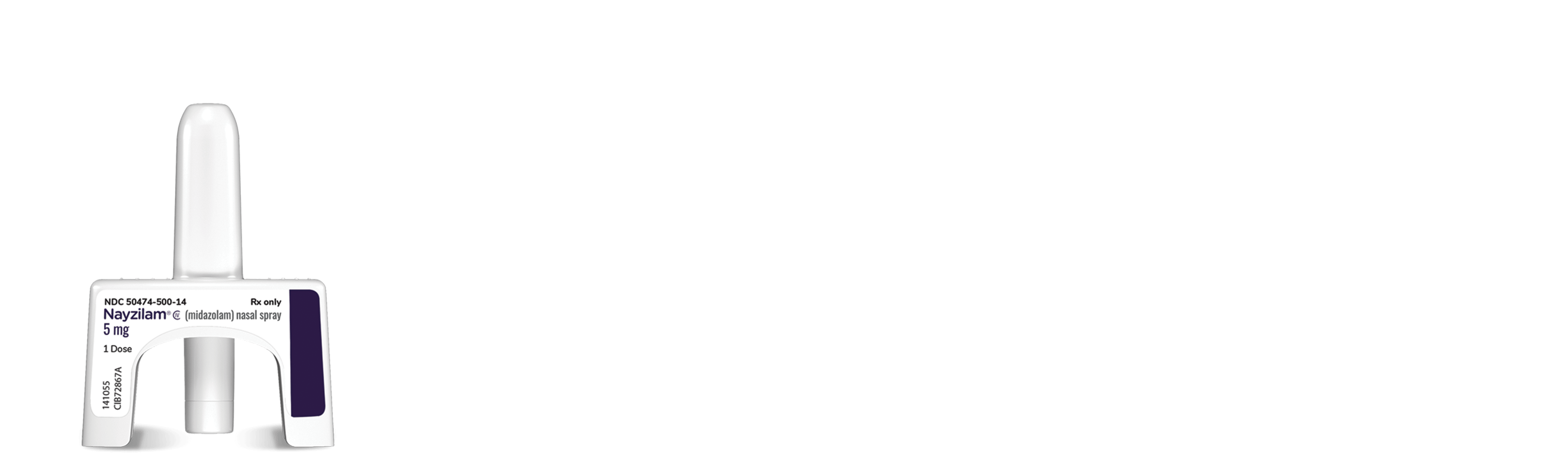
Important Safety Information you should know about NAYZILAM® (midazolam)
nasal
spray, CIV
What is the most important information I should know about NAYZILAM?
NAYZILAM is a benzodiazepine medicine. Taking benzodiazepines with opioid
medicines, alcohol, or
other central nervous system (CNS) depressants (including street drugs) can cause severe drowsiness,
breathing problems (respiratory depression), coma, and death.
Get emergency medical help right away if any of the following happens:
- shallow or slowed breathing
- breathing stops (which may lead to the heart stopping)
- excessive sleepiness (sedation)
Do not drive or operate heavy machinery until you know how taking NAYZILAM with opioids may affect you.
Risk of abuse, misuse, and addiction. There is a risk of abuse, misuse, and addiction with benzodiazepines, including NAYZILAM, which can lead to overdose and serious side effects including coma and death.
- Serious side effects including coma and death have happened in people who have abused or misused benzodiazepines, including midazolam (the active ingredient in NAYZILAM). These serious side effects may also include delirium, paranoia, suicidal thoughts or actions, seizures, and difficulty breathing. Call your healthcare provider or go to the nearest hospital emergency room right away if you have any of these serious side effects.
- You can develop an addiction even if you use NAYZILAM as prescribed by your healthcare provider.
- Use NAYZILAM exactly as your healthcare provider prescribed.
- Do not share your NAYZILAM with other people.
- Keep NAYZILAM in a safe place and away from children.
Physical Dependence and withdrawal reactions. Benzodiazepines, including NAYZILAM can cause physical dependence and withdrawal reactions, especially if you continue to use NAYZILAM daily. NAYZILAM is not intended for daily use.
- Do not suddenly stop using NAYZILAM without talking to your healthcare provider. Stopping NAYZILAM suddenly can cause serious and life-threatening side effects, including, unusual movements, responses, or expressions, seizures, sudden and severe mental or nervous system changes, depression, seeing or hearing things that others do not see or hear, an extreme increase in activity or talking, losing touch with reality, and suicidal thoughts or actions. Call your healthcare provider or go to the nearest hospital emergency room right away if you have any of these symptoms.
- Some people who suddenly stop benzodiazepines have symptoms that can last for several weeks to more than 12 months, including, anxiety, trouble remembering, learning, or concentrating, depression, problems sleeping, feeling like insects are crawling under your skin, weakness, shaking, muscle twitching, burning or prickling feeling in your hands, arms, legs or feet, and ringing in your ears.
- Physical dependence is not the same as drug addiction. Your healthcare provider can tell you more about the differences between physical dependence and drug addiction.
- Do not use more NAYZILAM than prescribed or use NAYZILAM more often than prescribed.
NAYZILAM can make you sleepy or dizzy and can slow your thinking and motor skills.
- Do not drive, operate heavy machinery, or do other dangerous activities until you know how NAYZILAM affects you.
- Do not drink alcohol or take other drugs that may make you sleepy or dizzy while using NAYZILAM without first talking to your healthcare provider. When taken with alcohol or drugs that cause sleepiness or dizziness, NAYZILAM may make your sleepiness or dizziness worse.
Like other antiepileptic medicines, NAYZILAM may cause suicidal thoughts or actions in a very small number of people, about 1 in 500. Call a healthcare provider right away if you have any of these symptoms, especially if they are new, worse, or worry you:
- thoughts about suicide or dying
- feeling agitated or restless
- acting aggressive, being angry, or violent
- attempts to commit suicide
- panic attacks
- acting on dangerous impulses
- new or worse depression
- trouble sleeping (insomnia)
- an extreme increase in activity and talking (mania)
- new or worse anxiety
- new or worse irritability
- other unusual changes in behavior or mood
How can I watch for early symptoms of suicidal thoughts or actions?
- Pay attention to any changes, especially sudden changes in mood, behaviors, thoughts, or feelings.
- Keep all follow-up visits with your healthcare provider as scheduled.
Call your healthcare provider between visits as needed, especially if you are worried about symptoms. Suicidal thoughts or actions can be caused by things other than medicines. If you have suicidal thoughts or actions, your healthcare provider may check for other causes.
What is NAYZILAM?
- NAYZILAM is a prescription medicine used for the short-term treatment of seizure clusters (also known as “acute repetitive seizures”) in patients 12 years of age and older.
- NAYZILAM is a federally controlled substance (CIV) because it contains midazolam that can be abused or lead to dependence. Keep NAYZILAM in a safe place to prevent misuse and abuse. Selling or giving away NAYZILAM may harm others and is against the law. Tell your healthcare provider if you have abused or been dependent on alcohol, prescription drugs, or street drugs.
- It is not known if NAYZILAM is safe and effective in children under 12 years of age.
Do not use NAYZILAM if you:
- are allergic to midazolam.
- have an eye problem called acute narrow-angle glaucoma.
Before you use NAYZILAM, tell your healthcare provider about all your medical conditions, including if you:
- have a history of depression, mood problems or suicidal thoughts or behavior.
- have asthma, emphysema, bronchitis, chronic obstructive pulmonary disease, or other breathing problems.
- have kidney or liver problems.
- have congestive heart failure.
- have a history of drug or alcohol abuse.
- are pregnant or plan to become pregnant. Taking NAYZILAM late in pregnancy may cause your baby to have symptoms of sedation (breathing problems, sluggishness, low muscle tone), and/or withdrawal symptoms (jitteriness, irritability, restlessness, shaking, excessive crying, feeding problems).
- are breastfeeding or plan to breastfeed. Breastfeeding during treatment with NAYZILAM may cause your baby to have sleepiness, feeding problems, and decreased weight gain.
Tell your healthcare provider about all the medicines you take, including prescription and over-the-counter medicines, vitamins and herbal supplements.
How should I use NAYZILAM?
- Use NAYZILAM in the nose only.
- Use NAYZILAM exactly as your healthcare provider tells you to use it and follow the Instructions for Use.
- Your healthcare provider has prescribed NAYZILAM to treat a type of seizure called a “seizure cluster”.
- If the seizure cluster is continuing 10 minutes after the first dose of NAYZILAM, a second dose of NAYZILAM may be used if you have been told to do so by your healthcare provider.
- If a second dose of NAYZILAM is used, give the second dose in the other nostril.
- Do not give more than 2 doses of NAYZILAM to treat a seizure cluster.
- If the seizures do not stop after NAYZILAM is used, get emergency medical help right away.
- Do not use NAYZILAM for more than 1 seizure cluster episode every 3 days. Do not use NAYZILAM for more than 5 seizure cluster episodes per month.
- If benzodiazepines are stopped after a person takes them daily, they can cause withdrawal symptoms. Stopping benzodiazepines suddenly can cause seizures that will not stop (status epilepticus), hearing or seeing things that are not there (hallucinations), shaking, nervousness, and stomach and muscle cramps. NAYZILAM is not intended to be used daily.
- If you use too much NAYZILAM, call your healthcare provider or go to the nearest emergency room right away.
What should I avoid while using NAYZILAM?
See “What is the most important information I should know about NAYZILAM?”
What are the possible side effects of NAYZILAM?
NAYZILAM may cause serious side effects, including:
- See “What is the most important information I should know about NAYZILAM?”
- Increase in eye pressure in people with acute narrow-angle glaucoma. See “Do not use NAYZILAM if you:”
The most common side effects of NAYZILAM include:
- sleepiness
- headache
- runny nose
- nasal discomfort
- throat irritation